before the main narrative
Three Witnesses See the Plates
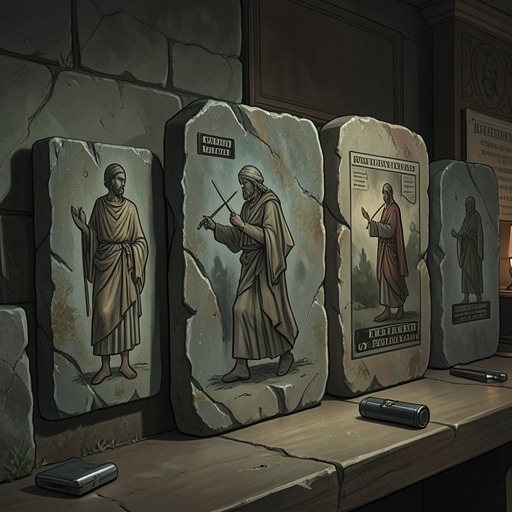
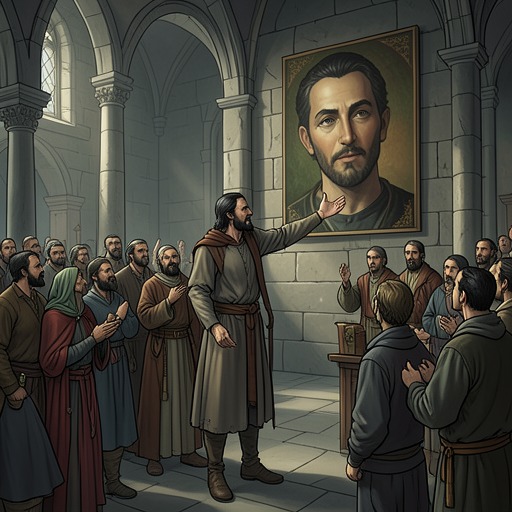
Oliver Cowdery, David Whitmer, and Martin Harris testified that an angel showed them the golden plates and their inscriptions. They declared that this record was translated by the gift and power of God, thus establishing the first public testimony regarding the Book of [Mormon](entity:character-recall-character-2996ac10d96b)
before the main narrative
Eight Witnesses Handle the Plates
Eight additional witnesses report that [Joseph](entity:character-recall-character-d14893b8a743) Smith showed them the plates. They handle and examine the leaves and engravings, describing their appearance as ancient and skillfully made.
600 BC
Lehi Warns Jerusalem
At the beginning of the reign of Zedekiah, prophets warn that [Jerusalem](entity:location-recall-location-jerusalem-8e4409a0f555) will be destroyed unless its people repent. Lehi prays for his people, receives a vision of God and heavenly beings, and reads of Jerusalem’s coming destruction and the Messiah’s redemption.
shortly after 600 BC
Lehi Leaves Jerusalem
The Lord warns Li Hai that enemies seek his life and commands him to take his family into the wilderness. He abandons his home, inheritance, wealth, and possessions, carrying only his family, provisions, and tents
early wilderness journey
Nephi Receives a Promise
[Nephi](entity:character-recall-character-588dc4a7a597) prays for understanding and receives a softened heart, while Ramon and Remiel remain resistant. The Lord promises that obedience will bring prosperity in the promised land and that Nephi will become ruler and teacher over his brothers
early wilderness journey
Retrieval of the Brass Plates
Li Hai commands Neph and his brothers to return to [Jerusalem](entity:location-recall-location-jerusalem-8e4409a0f555) for copper leaf pages, preserving their language, genealogy, and the words of the prophets. Their attempts to purchase or obtain the records fail, and their wealth is seized by [Laban](entity:character-recall-character-6ca3af982f55)
during the return to Jerusalem
Nephi Slays Laban
Guided by the Spirit, Neph finds [Laban](entity:character-recall-character-6ca3af982f55) drunk and is commanded to kill him. After hesitation, he obeys, takes Laban's sword and clothing, impersonates him, and persuades [Zarahemla](entity:location-recall-location-zarahemla-5348ab1d5d8f) to retrieve the plates and depart with the family
after the return from Jerusalem
Lehi Searches the Brass Plates
Li Hai examines Huang Tong yepian and discovers the books of [Moses](entity:character-recall-character-6e87fcb4db51), the Jewish record, prophetic writings, and his genealogy from Yosef (son of [Jacob](entity:character-recall-character-c58540a4795a)). The records confirm the family's covenant identity and become essential to preserving faith and language among their descendants
after the brass plates are secured
Ishmael’s Family Joins the Journey
The Lord commands Li Hai's sons to obtain wives, so Neph and his brothers return to [Jerusalem](entity:location-recall-location-jerusalem-8e4409a0f555) for [Ishmael](entity:character-recall-character-894ea57ec608) and his household. The family agrees to depart, though Ramon, Remiel, members of Ishmael's family, and others later rebel
during the wilderness encampment
Lehi’s Vision of the Tree of Life
Li Hai dreams of a dark wilderness, a radiant tree, a river, an iron rod, a narrow path, and a great building filled with mockers. He sees his family approaching the tree, while some travelers lose their way or abandon the fruit after being shamed
soon after the vision
Nephi Interprets the Vision
Nephite seeks the meaning of his father's vision and is shown the birth, ministry, suffering, death, and resurrection of [Jesus Christ](entity:character-recall-character-0ce96a76db69). The tree and its fruit represent the love of God, while the iron rod represents the [Word of God](entity:concept-recall-concept-0b1f5c7f0ebd) leading to life
same vision
Nephi Sees Israel’s Future
The vision expands to show the scattering of Israel, the rise of Gentile nations, the corruption of the gospel, and the emergence of a later record. This record will restore plain and precious truths and help gather Israel to the true Messiah.
after leaving the Valley of Lemuel
The Liahona Guides the Family
The Lord gives Li Hai's family a brass ball with pointers that direct their travels. The instrument works according to their faith, diligence, and heed, teaching that divine guidance is received through responsive obedience rather than possessed automatically
during the wilderness journey
Nephi’s Steel Bow Breaks
[Nephi](entity:character-recall-character-588dc4a7a597)'s fine steel bow breaks while the family is struggling to find food, and the others blame him for their hunger. He makes a wooden bow, asks Li Hai where to hunt, and leads the family back toward faith and prayer
after prolonged wilderness travel
Ishmael Dies at Nahom
Hishamari dies and is buried at Nahan. His daughters mourn their father and their suffering, and Ramon, Remir, and others again propose returning to [Jerusalem](entity:location-recall-location-jerusalem-8e4409a0f555), but the Lord chastens them and preserves the traveling party
after eight years in the wilderness
The Family Reaches Bountiful
After years of hunger, raw meat, childbirth, and exhaustion, Li Hai's family arrived at the fertile land, a rich coastal area abundant in fruits and wild honey. They named the sea Irian-ton, meaning many waters, and prepared for the next commandment
at Bountiful
Nephi Builds a Ship
The Lord commands [Nephi](entity:character-recall-character-588dc4a7a597) to build a ship without relying on ordinary human methods. He finds ore, makes tools, and begins the work, while his brothers mock him and refuse to believe that God has instructed him
during construction of the ship
Nephi Rebukes His Brothers
[Nephi](entity:character-recall-character-588dc4a7a597) recounts the Exodus, the [Red Sea](entity:location-recall-location-red-sea-8a08098c4e2c), manna, the brazen serpent, and the Lord's judgments to answer his brothers' rebellion. When they threaten him, divine power shakes them, but Nephi refuses their worship and directs them to honor God and their parents
after the ship is completed
The Family Crosses the Sea
The family boards Neph's ship with provisions, seeds, animals, wives, and children. Their journey begins well, but Ramun, Remir, members of [Ishmael](entity:character-recall-character-894ea57ec608)'s family, and their wives become disorderly and forget the power that brought them across the sea
during the ocean crossing
Nephi Is Bound at Sea
Because of rebellion and drunken revelry, Ni Fei is bound and the compass stops working. A violent storm drives the vessel backward for days, weakening Li Hai, Salaya, the children, and the entire company until the rebels release Ni Fei and repent
after the ocean crossing
The Family Reaches the Promised Land
[Nephi](entity:character-recall-character-588dc4a7a597) prays, the winds cease, and the ship reaches the promised land. The family plants its seeds, finds abundant animals and ore, and begins a new life marked by agriculture, craftsmanship, and material prosperity
after settlement in the promised land
Nephi Records the Prophecies
[Nephi](entity:character-recall-character-588dc4a7a597) makes new plates for the ministry and prophecies of his people. He teaches that [Jesus Christ](entity:character-recall-character-0ce96a76db69) will be rejected, crucified, and resurrected, and that Israel will ultimately be gathered from the four quarters of the earth
early generations in the promised land
Nephi Teaches Isaiah
Nephite reads [Isaiah](entity:character-recall-character-ca7d0e657f88) to his people and applies the prophecies to their own future. The passages describe Israel's scattering, redemption, the Messiah, Babylon's fall, and the eventual restoration of Zion
near the end of Lehi’s life
Lehi Blesses His Children
Li Hai gives final blessings to his sons, the children of Ramon and Remir, Zoran, and his household. He warns them against rebellion, teaches the reality of opposition and agency, and explains that the Messiah’s [Atonement](entity:concept-recall-concept-508986ac4752) makes freedom and joy possible after the Fall
same final teachings
Lehi Teaches Opposition and Agency
Li Hai explains that the Fall created a probationary state in which people can know good and evil and choose for themselves. Without opposition there would be no righteousness, happiness, misery, or meaningful purpose; through [Jesus Christ](entity:character-recall-character-0ce96a76db69), humanity may choose liberty and eternal life
after his final blessings
Lehi Dies
Li Hai dies after completing his counsel to the family. His death removes the last unifying patriarchal authority, and resentment toward Nifim soon intensifies among Lamun, Remir, and their allies
shortly after Lehi’s death
Nephi Flees to Found Nephi
Warned that his brothers seek his life, Nephite leads his family, [Zoram](entity:character-recall-character-ca6e44d790da), Shem's family, [Jacob](entity:character-recall-character-c58540a4795a), [Joseph](entity:character-recall-character-d14893b8a743), and others into a separate settlement. They name the place and themselves after Nephite, establish worship, cultivate the land, and build a temple
after the founding of Nephi
The Lamanite Curse Is Declared
The Lord cuts [Laman](entity:character-recall-character-93803d65d5c0) and Remiel's faction off from his presence because of their rebellion. The narrative describes a mark and curse separating the two peoples, while warning that the [Lamanites](entity:character-recall-character-b33d0f13ff09) may become a scourge to preserve remembrance among Nephite's descendants
early Nephite settlement
Jacob and Joseph Become Priests
Nephite consecrates [Jacob](entity:character-recall-character-c58540a4795a) and [Joseph](entity:character-recall-character-d14893b8a743) as priests and teachers. The community prospers through labor, agriculture, craftsmanship, and worship, and its social ideal is summarized as living after the manner of happiness
after Nephi’s death
Jacob Condemns Pride
[Jacob](entity:character-recall-character-c58540a4795a) confronts the [Nephites](entity:character-recall-character-eb3c8324cbb3) for pursuing gold, silver, costly clothing, and social superiority. He teaches that all people are alike before God and commands the wealthy to share their substance rather than despise or persecute the poor
same temple preaching
Jacob Condemns Plural Wives
[Jacob](entity:character-recall-character-c58540a4795a) condemned the sexual sins committed by the [Nephites](entity:character-recall-character-eb3c8324cbb3), using David and Solomon as examples. He declared that the Lord delights in purity, commanded monogamy, and condemned the heart that harms wives and children through infidelity
same period
Jacob Prophesies Israel’s Restoration
[Jacob](entity:character-recall-character-c58540a4795a) teaches that Israel will be scattered and later restored through the Messiah. He reads the prophecy of the tame olive tree, presenting the Lord's long labor of pruning, grafting, and preserving branches as a history of covenant judgment and mercy
later in Jacob’s ministry
Sherem Denies Christ
Sherem, a learned and persuasive dissenter, argues that there will be no Christ and accuses Yakuo of corrupting the [Law of Moses](entity:rule-recall-rule-law-of-moses-c9c7399d6db0). Yakuo answers that the scriptures and the [Holy Ghost](entity:concept-recall-concept-805af8ca81f4) testify of Christ, and that without the [Atonement](entity:concept-recall-concept-508986ac4752) all humanity would be lost
immediately after the confrontation
Sherem Confesses and Dies
Sherem demands a sign and is struck by the power of God. Before dying, he confesses that he was deceived by the devil, retracts his denial of Christ, and acknowledges the scriptures, angels, and the [Holy Ghost](entity:concept-recall-concept-805af8ca81f4).
after Jacob’s lifetime
Enos Receives Forgiveness
[Enos](entity:character-recall-character-15079fe9700b) remembers his father's teachings while hunting and wrestles before God in prayer throughout the day and night. He receives assurance that his sins are forgiven through faith in [Jesus Christ](entity:character-recall-character-0ce96a76db69), and his personal redemption turns into concern for his people and their enemies
same day of conversion
Enos Prays for the Lamanites
After praying for the [Nephites](entity:character-recall-character-eb3c8324cbb3), [Enos](entity:character-recall-character-15079fe9700b) pleads for the [Lamanites](entity:character-recall-character-b33d0f13ff09) and asks that the Nephite record be preserved for their future salvation. The Lord promises that the record will come forth in due time according to the faith of earlier prophets and faithful record keepers
generations after Enos
Omni’s Line Preserves the Record
Yalong, Oumae, Amaron, Chemish, Abinadom, and Amalek successively keep the small plates. Their brief entries describe wars, apostasy, destruction, migration, and the continuing need to preserve the covenant record
late Nephite history
Mosiah I Leads a Migration
[Mosiah I](entity:character-recall-character-7b4e32c6b994) is warned to leave the land of [Nephi](entity:character-recall-character-588dc4a7a597) and leads those willing to follow into the wilderness. They discover the people of [Zarahemla](entity:location-recall-location-zarahemla-5348ab1d5d8f), unite with them, and establish a new political center in Zarahemla
before the reign of 摩赛二世
King Benjamin Unites the People
[King Benjamin](entity:character-recall-character-5184a618c4af) defeats invading [Lamanites](entity:character-recall-character-b33d0f13ff09), suppresses internal contention, and restores peace with the help of holy prophets. His reign becomes a model of righteous leadership based on service rather than wealth or personal power
near the end of King Benjamin’s reign
King Benjamin Teaches Service
From a tower beside the temple, Benjamin teaches that serving others is serving God. He rejects royal self-glorification, reminds the people that all depend on God for life and sustenance, and calls them to humility, gratitude, and service
same covenant assembly
King Benjamin Announces Christ
An angel reveals to Benjamin the king that [Jesus Christ](entity:character-recall-character-0ce96a76db69) will come in the flesh, perform miracles, suffer, bleed, die, and rise again. The prophecy links the [Atonement](entity:concept-recall-concept-508986ac4752) to the redemption of children, the resurrection, and salvation through repentance and faith
immediately after Benjamin’s sermon
The People Covenant with Christ
The people fall to the earth, recognize their fallen state, and plead for the atoning blood of [Jesus Christ](entity:character-recall-character-0ce96a76db69). Receiving peace and a mighty change of heart, they covenant to keep God’s commandments and take upon themselves Christ’s name.
after King Benjamin’s death
Mosiah Becomes King
[Moses](entity:character-recall-character-6e87fcb4db51) II succeeds Benjamin the King and continues his father's righteous administration. He teaches his sons the language, records, prophecies, and commandments that preserve the people from ignorance and apostasy
early reign of King Mosiah
Ammon Finds Limhi’s People
[Moses](entity:character-recall-character-6e87fcb4db51) II sends Amon and sixteen strong men to find the descendants of [Zeniff](entity:character-recall-character-bddda57958bb) who left [Zarahemla](entity:location-recall-location-zarahemla-5348ab1d5d8f). After wandering for forty days, Amon reaches Limhi—[Nephi](entity:character-recall-character-588dc4a7a597), where he meets Limhi's people living under Lamanite bondage
after Ammon reaches Lehi-Nephi
Limhi Seeks Deliverance
Limhi explains that his people suffer heavy tribute because of the sins of Noah’s regime and the failures of their ancestors. He urges them to trust God, repent, and seek deliverance rather than rely solely on military strength.
one generation before Limhi
Zeniff Establishes Lehi-Nephi
Zhenyuf led a group of people to reclaim their ancestral land from Chairenhla. His initial peaceful relationship with the Ramana king made settlement and prosperity possible, but the Ramana later imposed tribute and incited war
after Zeniff’s reign
Noah Corrupts the Kingdom
[King Noah](entity:character-recall-character-6c4a8d051a0e) replaced the just priests with corrupt supporters, imposed heavy taxes on the people, built luxurious buildings, and indulged in polygamy, wine, and sexual sins. The priests in his court turned public wealth into private luxury and led the kingdom toward a state of servitude
during Noah’s reign
Abinadi Warns King Noah
Abinadab prophesied that unless the people repented, they would be enslaved, suffer, and be destroyed. [King Noah](entity:character-recall-character-6c4a8d051a0e) and his priests refused this warning, imprisoned him, and accused him of threatening the stability of the kingdom
during his trial
Abinadi Explains the Law
Before [King Noah](entity:character-recall-character-6c4a8d051a0e) and his priests, [Abinadi](entity:character-recall-character-d983f1747b6f) recounted the commandments and revealed that the priests had not kept the law of [Moses](entity:character-recall-character-6e87fcb4db51). He taught that the law is a type and shadow pointing to Christ, and that salvation cannot come solely through the law
same trial
Abinadi Prophesies Christ
Abinaud explained [Isaiah](entity:character-recall-character-ca7d0e657f88)'s prophecy about the suffering servant, pointing out that the prophecy refers to [Jesus Christ](entity:character-recall-character-0ce96a76db69). He taught that Christ took on flesh, suffered, was crucified, broke the chains of death, and interceded for those who repent
shortly after his testimony
Abinadi’s Martyrdom
Abinnadab refused to retract his message even when threatened with death. Noah the king ordered him to be burned, and Abinnadab died, warning that the same violence would come upon the priests and their descendants
immediately after Abinadi’s martyrdom
Alma the Elder Flees
Queen Alma I believed in [Abinadi](entity:character-recall-character-d983f1747b6f) and prayed for his release, so [King Noah](entity:character-recall-character-6c4a8d051a0e) expelled Queen Alma I and sought to kill her. While Queen Alma I was in hiding, she recorded the prophet's words and began to preserve the testimony that would shape the new church
after Alma’s flight
Alma Establishes the Church
Alma I secretly taught repentance, redemption, resurrection, and faith in Christ in the [Mormon](entity:character-recall-character-2996ac10d96b) waters. He baptized his followers, organized them into a church, set up priests, and established a covenant community committed to bearing one another's burdens and serving the poor
after the church is discovered
Alma’s People Escape
The army of Noah searched for the congregation of Alma I, forcing the believers to flee into the wilderness. Their community arrived in Shilah, where they built a city, cultivated the land and prospered, but later fell into the bondage of the [Lamanites](entity:character-recall-character-b33d0f13ff09)
after two years of bondage
Limhi’s People Escape
Gideon devised a plan to make the guards of Ramun drunk and led the people of Linhai through a hidden passage. They escaped with their families and belongings, crossing the wilderness under the protection of Mosse II to reach Chairenla
after prolonged bondage
Alma’s People Are Delivered
The people of Alma I were forbidden to pray loudly, but they still poured their hearts out to God. The Lord lightened their burdens, promised to save them, and made the guards sleep, allowing the people to flee to Chalirana
after the return of Limhi’s people
Mosiah Translates Jaredite Records
The explorers sent by Linhai discovered ruins, skeletons, weapons, and twenty-four golden sheets of the Yalere. Maser II used an interpreter to translate the records, revealing the long history and destruction of the Yalere
end of Mosiah II’s reign
Nephite Kingship Is Abolished
Because no son was willing to become king, Musa II proposed the establishment of a system of judges elected by the people. The people accepted this change, ending hereditary monarchy and establishing a judicial system in which rulers were responsible to the law and the voice of the people
first year of the Reign of the Judges
Nehor Introduces Priestcraft
Nihe proclaimed that priests should be popular and supported by the people, and that ultimately all humanity would be saved. His appealing teachings won followers and money, forming a public movement centered on priestcraft and secular authority
first year of the Reign of the Judges
Nehor Kills Gideon
[Nehor](entity:character-recall-character-e7cc0001693e) disputed with the teacher of the Church of God, Gideon, and killed him with a sword. Alma II judged Nehor guilty of murder and sorcery, and Nehor was executed, but his ideology continued to spread
fifth year of the Reign of the Judges
Amlici Seeks Kingship
Amlici gathers supporters who want him made king and intends to destroy the church. The voice of the people rejects him, so he has himself crowned by his followers and raises an army against the [Nephites](entity:character-recall-character-eb3c8324cbb3).
fifth year of the Reign of the Judges
Amlicite War
Amlici's forces battle the [Nephites](entity:character-recall-character-eb3c8324cbb3) near the Xidun River, then join with a Lamanite army. Alma kills Amlici in single combat, while the Nephites defeat and scatter the combined armies into Hemengshan Wangye
ninth year of the Reign of the Judges
Alma Preaches in Zarahemla
Distressed by pride, inequality, persecution, and neglect of the poor, Alma II relinquishes the judgment-seat to [Nephihah](entity:location-recall-location-nephihah-238b8f107f2e). He returns wholly to the high priesthood and begins a direct campaign of preaching and testimony
during the ninth year
Alma Calls for a Mighty Change
Alma II asks whether the people have been spiritually born of God, received the image of Christ, and experienced a mighty change of heart. He warns that pride, envy, persecution, and indifference toward the poor reveal that many are not prepared to meet God
tenth year of the Reign of the Judges
Ammonihah Rejects Alma
Alma II preaches in Amunihah, but its people reject, insult, and expel him. An angel commands him to return because the city is plotting against liberty and will be destroyed unless it repents
shortly after Alma returns
Alma and Amulek Join
[Amulek](entity:character-recall-character-ulek-447dc871c81c) receives an angelic warning and welcomes the fasting Alma II into his home. Their hospitality becomes the beginning of a powerful missionary partnership aimed at confronting [Ammonihah](entity:location-recall-location-ammonihah-9a061b8bffe9)'s corruption
same mission in Ammonihah
Alma and Amulek Face Zeezrom
The lawyer [Zeezrom](entity:character-recall-character-e864f9015bf5) tries to trap [Amulek](entity:character-recall-character-ulek-447dc871c81c) with money and theological questions. Amulek refuses the bribe, affirms one living God, and teaches that [Jesus Christ](entity:character-recall-character-0ce96a76db69) will redeem people from their sins rather than save them while they remain in sin
during the Ammonihah debate
Alma Explains the Plan
Alma II explains that the Fall created a probationary state, that death is followed by judgment, and that hardened hearts receive a second death. He teaches that repentance allows mercy to claim the penitent through the [Atonement](entity:concept-recall-concept-508986ac4752)
after the public preaching
Ammonihah Burns the Believers
The rulers of [Ammonihah](entity:location-recall-location-ammonihah-9a061b8bffe9) burn believing women, children, and sacred records in an act of religious persecution. Alma II and [Amulek](entity:character-recall-character-ulek-447dc871c81c) are forced to witness the martyrdom, while the destruction becomes a testimony against the city's leaders
after many days in prison
The Prison Falls
After enduring hunger, nakedness, mockery, and beatings, Alma II and [Amulek](entity:character-recall-character-ulek-447dc871c81c) pray for deliverance. Their bonds break, the prison walls collapse, and the chief judge, lawyers, priests, and teachers who persecuted them are killed
after the fall of Ammonihah
Zeezrom Is Healed
[Zeezrom](entity:character-recall-character-e864f9015bf5), tormented by guilt and fever, asks Alma II to heal him. He believes in Christ's redemption, is restored, baptized, and begins preaching, turning from a manipulator of law into a witness of mercy
eleventh year of the Reign of the Judges
Ammonihah Is Destroyed
Lamanite forces attack [Ammonihah](entity:location-recall-location-ammonihah-9a061b8bffe9) before the [Nephites](entity:character-recall-character-eb3c8324cbb3) can defend it, destroying the city and carrying survivors away. The city's sudden fall fulfills the warnings of Alma II and becomes known as the [Desolation](entity:location-recall-location-desolation-40507f13d02c) of Nehors
after Ammonihah’s destruction
Zoram Recovers the Captives
[Zoram](entity:character-recall-character-ca6e44d790da), Lehi, and Aha ask Alma II where the [Lamanites](entity:character-recall-character-b33d0f13ff09) have taken the captives. Guided by revelation, they cross the Sidon River, defeat the Lamanite army, and recover every prisoner without losing one
fourteenth year of the Reign of the Judges
Sons of Mosiah Begin Their Mission
Amon, Aaron, Omna, and Shimnah, together with companions, spend fourteen years preaching among the [Lamanites](entity:character-recall-character-b33d0f13ff09). Their preparation consists of scripture study, prayer, fasting, revelation, patience, and willingness to endure severe affliction
during the mission’s early phase
Ammon and the Flocks of Lamoni
Amon becomes a servant to Ramoni King and is assigned to guard the king's flocks. When raiders scatter them at the waters of Sebus, Amon gathers the animals and cuts off the attackers' arms, turning a menial duty into an opening for the gospel
after the flocks are restored
King Lamoni’s Conversion
Amon taught Ramoni that the great spirit is God, the creator of heaven and earth, and the one who planned the plan of redemption. Ramoni believed, prayed for mercy, and fell into a state caused by God. When he awoke, he declared that he had seen the redeemer
during Lamoni’s conversion
Abish Awakens the Household
[Abish](entity:character-recall-character-3345d1d79686) was secretly converted many years ago. She gathered the people after seeing [Laman](entity:character-recall-character-93803d65d5c0), the queen mother, the servant, and Ammon all be overcome by the Spirit. When contention threatened the gathering, she lifted up the queen mother; the queen mother witnessed [Jesus Christ](entity:character-recall-character-0ce96a76db69) and the redemption
after Lamoni’s conversion
Aaron Converts Lamoni’s Father
Aaron and his brothers were released from prison and met the father of Ramoni; he initially demanded the death of Amun. Amun defeated him but spared his life, and the king then agreed to release the missionary, later listening to Aaron's teachings on creation, fall, and the redemption of Christ
after the Lamanite royal conversion
The Anti-Nephi-Lehies Are Formed
The Raman who converted adopted the name of the anti-Nephite, in order to distinguish themselves from their past traditions. They became diligent, honest, peaceful, and lived in friendly relations with the [Nephites](entity:character-recall-character-eb3c8324cbb3); the gospel reversed the old boundaries, no longer determining justice by inherited status, but
immediately before the Lamanite attack
Anti-Nephi-Lehies Bury Weapons
The penitent remembers the murder they committed and the mercy that forgives their sins. They bury their swords and make a covenant never to spill blood again, preferring to die or give rather than resort to violence again
after the Anti-Nephi-Lehite massacre
The People of Ammon Migrate
When the enemy Ramans attacked, these people who practiced non-violence allowed themselves to be killed until the attackers repented. The [Nephites](entity:character-recall-character-eb3c8324cbb3) accepted the survivors, gave them Zenos, and stationed an army between them and their enemies, forming a lasting alliance
nineteenth year of the Reign of the Judges
Moroni Raises the Title of Liberty
Amarikiah incited the dissenters to overthrow the free government and become king. Moronihite took off his outer garment, wrote a declaration about faith, religion, freedom, peace, wife, and children, and raised the flag of freedom, declaring to the [Nephites](entity:character-recall-character-eb3c8324cbb3)
same period
Amalickiah Rises to Power
After the [Nephites](entity:character-recall-character-eb3c8324cbb3) supporters of Amalikiah were defeated, he fled to the [Lamanites](entity:character-recall-character-b33d0f13ff09). Through deception, poisoning, murder, manipulating the queen mother, and false testimony, he became king and prepared the Lamanites to wage war against the Nephites
after Amalickiah’s rise
Nephite Defensive Warfare
Moralne fortified the city of [Nephites](entity:character-recall-character-eb3c8324cbb3) with earthworks, ditches, walls, towers, armor, and a disciplined army. The Nephites distinguished their defensive wars, fought for family, freedom, worship, and survival, from aggressive conquests; they repeatedly defeated larger Lamanite
twenty-fifth year of the Reign of the Judges
Amalickiah Is Slain
Amalikea captured many eastern cities, but Tainkum halted his advance near the Fertile Land. At night, Tainkum entered the king's camp and killed him with a spear, ending the rule of the long-term war planners
twenty-eighth year of the Reign of the Judges
The Stripling Warriors Enlist
The sons of people of Ammon are not bound by the non-violent covenant of their fathers, and voluntarily defend the [Nephites](entity:character-recall-character-eb3c8324cbb3). Two thousand young men chose [Helaman](entity:character-recall-character-8de43491ad5c) as their leader and vowed to protect freedom, the nation, and the community
twenty-sixth to twenty-ninth years of the Reign of the Judges
The Stripling Warriors Survive
Under the command of Syllam, the young warriors led a numerically superior [Laman](entity:character-recall-character-93803d65d5c0) army away from Antipara, then returned to rescue the exhausted Antipus army. Although everyone was wounded, none of the 2,060 died; Syllam attributed this to their confidence
thirtieth year of the Reign of the Judges
Moroni and Pahoran Unite
Molon accused the government of neglecting the army, but Paralarn explained that the royalists had seized Chalreharnla and forced him from power. Molon set aside his anger and joined Paralarn, defeating the rebels and restoring the legitimate government
thirty-first year of the Reign of the Judges
The War Ends
Maron, Lehi, and Teankum recovered the remaining eastern cities. Teankum killed Amalony, but was also killed; the [Nephites](entity:character-recall-character-eb3c8324cbb3) finally drove out the [Lamanites](entity:character-recall-character-b33d0f13ff09), and then the people rebuilt the church and restored peace
thirty-seventh to thirty-eighth years of the Reign of the Judges
Hagoth Sails North
Hagith built large ships on the west coast, carrying supplies, women, and children to send settlers north. The first ship returned once, but later voyages disappeared, leaving these migrations as unresolved clues in the history of the [Nephites](entity:character-recall-character-eb3c8324cbb3)
forty-eighth to sixty-third years of the Reign of the Judges
Nephi and Lehi Preach Again
As pride, wealth, and political corruption weaken the [Nephites](entity:character-recall-character-eb3c8324cbb3), [Nephi](entity:character-recall-character-588dc4a7a597) (son of [Helaman](entity:character-recall-character-8de43491ad5c)) abandons the judgment-seat and joins Lehi in preaching. Their work converts thousands of [Lamanites](entity:character-recall-character-b33d0f13ff09) and restores the balance of spiritual strength between the two peoples
sixty-third year of the Reign of the Judges
Nephi and Lehi in Prison
The missionaries are imprisoned, surrounded by fire, and protected from their captors. A voice calls the prisoners to repent; after the darkness lifts, angels appear, and hundreds of [Lamanites](entity:character-recall-character-b33d0f13ff09) believe, lay down their weapons, and surrender their lands.
sixty-seventh to sixty-eighth years of the Reign of the Judges
Gadianton Robbers Spread
Secret combinations of murderers and plunderers spread among the [Nephites](entity:character-recall-character-eb3c8324cbb3), promising power, protection, and gain. Their members corrupt government, oppress the poor, and turn the nation’s wealth into an instrument of violence.
seventy-second to seventy-sixth years of the Reign of the Judges
The Famine Brings Repentance
At Nephie (son of Sherem)'s request, famine replaces warfare as the nation's chastening. Hunger and drought finally cause the people to abandon the [Gadianton](entity:character-recall-character-28478ec702fd) band, repent, and plead for rain; the Lord ends the famine and restores fertility
eighty-sixth year of the Reign of the Judges
Samuel Prophesies Christ’s Coming
Samuel (Lamanite) preaches from the walls of Chalreahra after being expelled from the city. He warns of destruction in four hundred years, calls the [Nephites](entity:character-recall-character-eb3c8324cbb3) to repentance, and prophesies Christ's birth, death, resurrection, and the signs that will
ninetieth to ninety-first years of the Reign of the Judges
The Signs Are Rejected
Angels, signs, and wonders begin to appear, but most [Nephites](entity:character-recall-character-eb3c8324cbb3) explain them away as coincidence, fraud, or demonic deception. Unbelief hardens as the people demand that Christ appear in their own land before they will accept the prophecies.
six hundred years after Lehi left Jerusalem
The Night Without Darkness
On the night foretold by Samuel (Lamanite), darkness disappears and the entire land remains light through the night and following day. A new star appears, unbelievers collapse in fear, and the people recognize that [Jesus Christ](entity:character-recall-character-0ce96a76db69) has been born
nine to fifteen years after Christ’s birth
The Nephites Forget the Sign
The people gradually dismiss the night without darkness and new star, while Satan spreads lies that the signs were produced by human or demonic power. [Gadianton robbers](entity:character-recall-character-0ee8a5403772) regain strength, and wars return as the [Nephites](entity:character-recall-character-eb3c8324cbb3) and converted [Lamanites](entity:character-recall-character-b33d0f13ff09) unite against them.
sixteenth year after Christ’s birth
Giddianhi Threatens Lachoneus
Giddianhi sends [Lachoneus](entity:character-recall-character-6714bc18a6d0) an arrogant ultimatum demanding the [Nephites](entity:character-recall-character-eb3c8324cbb3)' lands and possessions. Lachoneus refuses to yield, calls the people to repentance, and gathers them into one fortified body under the leadership of Godekidoi
eighteenth to twenty-first years after Christ’s birth
The Nephites Defeat the Robbers
The [Nephites](entity:character-recall-character-eb3c8324cbb3) abandon vulnerable lands, gather provisions for seven years, and wait behind fortifications. They defeat Giddianhi’s army, kill Giddianhi, surround Zemnarihah’s retreat, and hang him, ending the great siege of the people.
twenty-second to twenty-ninth years after Christ’s birth
The Land Is Reunited
After the robbers’ defeat, the [Nephites](entity:character-recall-character-eb3c8324cbb3) return to their lands, rebuild cities and roads, and restore equitable laws. Prosperity grows until pride, wealth, social classes, and persecution again break the church and prepare the nation for catastrophe.
thirty-fourth year after Christ’s birth
Destruction at Christ’s Death
At the time of [Jesus Christ](entity:character-recall-character-0ce96a76db69)’s death, earthquakes, tempests, fires, whirlwinds, darkness, and upheaval destroy cities across the land. [Zarahemla](entity:location-recall-location-zarahemla-5348ab1d5d8f) burns, Moroni sinks beneath the sea, Moronihah is buried, and three days of darkness force the survivors to confront their rejection of the prophets.
after the three days of darkness
Christ Appears at Bountiful
A multitude gathers around the temple at Fuyoushita and hears the Father announce his Beloved Son. [Jesus Christ](entity:character-recall-character-0ce96a76db69) descends from heaven, identifies himself as the God of Israel, and invites everyone to feel the wounds of his crucifixion
same appearance
Christ Establishes His Doctrine
Jesus gives [Nephi](entity:character-recall-character-588dc4a7a597) and other disciples authority to baptize and defines the [Doctrine of Christ](entity:rule-recall-rule-doctrine-of-christ-9fefd57cf79b) as repentance, faith, baptism, the [Holy Ghost](entity:concept-recall-concept-805af8ca81f4), and endurance to the end. He forbids contention and warns that adding to or subtracting from this doctrine builds on sand
during the first day at Bountiful
Christ Heals the Multitude
Jesus invites the sick, wounded, blind, deaf, lame, and afflicted to come forward. He heals every person, then blesses the little children, prays for them, and reveals angels descending to minister among them.
during the Bountiful ministry
Christ Gives the Sacrament
Jesus blesses bread and wine as remembrance of his body and blood and commands the disciples to administer them to repentant believers. He teaches watchful prayer, family prayer, open fellowship, and careful ministry to those who are unworthy without casting them away.
during the Bountiful ministry
Christ Teaches the Sermon
Jesus teaches the Beatitudes, reconciliation, purity, forgiveness, love of enemies, secret prayer, fasting, the [Golden Rule](entity:rule-recall-rule-golden-rule-fe42f43dd568), and the narrow way. He commands the people to become perfect through faithful obedience and to build their lives upon his rock.
later in the Bountiful ministry
Christ Promises Israel’s Gathering
Jesus identifies the [Nephites](entity:character-recall-character-eb3c8324cbb3) as other sheep of Israel and promises that the scattered tribes will hear his voice. He foretells the Gentiles’ role, the restoration of [Jerusalem](entity:location-recall-location-jerusalem-8e4409a0f555), the building of a New Jerusalem, and the eventual gathering of Israel.
after the three-day ministry
Christ Establishes His Church
The disciples continue teaching, baptizing, administering the sacrament, and receiving the [Holy Ghost](entity:concept-recall-concept-805af8ca81f4). Jesus declares that the church must bear his name and be built upon his gospel, while the people begin sharing goods and living without inequality.
thirty-sixth to roughly two hundred years after Christ’s birth
The Nephite Golden Age
All the people become converted, hold goods in common, and live without class divisions, conflict, crime, or ethnic labels. [Love of God](entity:concept-recall-concept-7a70421ee98c) fills the society, miracles continue, cities are rebuilt, and the people become the happiest society described in the record.
two hundred first to two hundred thirty-first years after Christ’s birth
Society Divides Again
Prosperity produces costly clothing, class distinctions, private wealth, rival churches, priestcraft, and persecution. The old categories of [Nephites](entity:character-recall-character-eb3c8324cbb3) and [Lamanites](entity:character-recall-character-b33d0f13ff09) return, and the three disciples continue ministering amid a society that increasingly rejects Christ’s gospel.
three hundred twenty-six years after Christ’s birth
Mormon Becomes Commander
Ammaron instructs the ten-year-old [Mormon](entity:character-recall-character-2996ac10d96b) to preserve the records and later retrieve them from Shim Mountain. At sixteen, Mormon becomes commander of the Nephite armies as wars resume, even though the people's wickedness causes miracles and spiritual gifts to cease
three hundred twenty-six to three hundred eighty years after Christ’s birth
Mormon Leads the Final Retreat
[Mormon](entity:character-recall-character-2996ac10d96b) leads the [Nephites](entity:character-recall-character-eb3c8324cbb3) through repeated retreats, battles, treaties, and territorial losses. He repeatedly urges repentance, but their sorrow is not godly repentance; they continue fighting for survival while refusing to call upon God.
after three hundred sixty-two years
Mormon Refuses Command
The [Nephites](entity:character-recall-character-eb3c8324cbb3) boast of their strength and swear vengeance against the [Lamanites](entity:character-recall-character-b33d0f13ff09). [Mormon](entity:character-recall-character-2996ac10d96b) refuses to lead them in revenge, obeying the Lord’s declaration that vengeance belongs to God, though he continues recording their destruction as a witness to future generations.
three hundred eighty-four years after Christ’s birth
Nephite Final Destruction at Cumorah
[Mormon](entity:character-recall-character-2996ac10d96b) gathers the remaining [Nephites](entity:character-recall-character-eb3c8324cbb3) at Kumo-ra Mountain for their final battle. The [Lamanites](entity:character-recall-character-b33d0f13ff09) kill nearly the entire nation, including Mormon's ten thousand and the leaders of other armies; only twenty-four Nephites survive, along with a few fugitives and defectors
after the battle at Cumorah
Moroni Conceals the Plates
Moroni remains alone after his father's death and the destruction of the [Nephites](entity:character-recall-character-eb3c8324cbb3). He completes the record, hides the sacred plates, and preserves a final witness that [Jesus Christ](entity:character-recall-character-0ce96a76db69) is the Redeemer and that the record will come forth by God's power
ancient era before Lehi
The Jaredites Leave Babel
Yale and Yale's brother ask the Lord to preserve their language and the language of their friends when the tower's people are scattered. The Lord leads their families and flocks through the wilderness toward a choice land promised to those who will serve him
ancient era
Jaredite Voyage to the Promised Land
Yale's brother builds eight sealed barges, solves the problems of air and light, and prepares luminous stones for the crossing. The Lord drives the ancestors of the twenty-four golden sheet people through fierce storms for 344 days until they land in the promised land
during the Jaredite voyage preparations
Brother of Jared’s Theophany
When the Lord touches the stones, Yale's brother sees his finger and then sees [Jesus Christ](entity:character-recall-character-0ce96a76db69) in a premortal appearance. Because of exceptional faith, he is shown the inhabitants of the earth and receives revelations too sacred to disclose until a future time
after settlement in the promised land
Jaredite Kingship Begins
The Jaredites prosper and eventually request a king despite warnings that kingship leads to captivity. They choose Orihah, whose righteous reign brings peace, but later generations repeatedly turn monarchy into a vehicle for rebellion, taxation, captivity, and war.
many generations after settlement
Jaredite Secret Combinations Return
The daughter of [Jared](entity:character-recall-character-1e45967842d5) revives ancient secret plans to restore her father’s kingdom. [Akish](entity:character-recall-character-99be871ca64d) administers murder oaths to his relatives, and the combination spreads through the kingdom, producing assassinations, civil war, and the destruction of nearly the entire population.
during the long Jaredite dynasties
Jaredite Prophets Are Rejected
Prophets repeatedly warn that pride, idolatry, murder, and secret combinations will bring famine and destruction. Kings and people reject, imprison, and kill them, while occasional repentance delays but never permanently prevents the collapse.
final Jaredite generation
Ether Prophesies Destruction
[Ether](entity:character-recall-character-e1ea4a2c0991) prophesies to [Coriantumr](entity:character-recall-character-ac0386a15cde) that the people will be destroyed unless they repent, and that another people will inherit the land. Coriantumr rejects the warning, and the nation descends into a total war in which every faction fights for power
after years of civil war
Jaredite Final Battle
[Coriantumr](entity:character-recall-character-ac0386a15cde) and [Shiz](entity:character-recall-character-53d72d942d84) gather the remaining population into rival armies and fight through years of exhaustion, bloodshed, and famine. Nearly two million people die, and the final combat ends when Coriantumr kills Shiz and collapses beside him.
immediately after the Jaredite collapse
Ether Finishes His Record
[Ether](entity:character-recall-character-e1ea4a2c0991) witnesses the fulfillment of his prophecies and completes his record before hiding it. The record is later discovered by Limhi's expedition and translated by Mosiah II, creating the historical link between the Jaredites and the [Nephites](entity:character-recall-character-eb3c8324cbb3)
during his final years
Moroni Teaches Faith
Molon reflects on miracles, revelation, and the vision of the brother of [Jared](entity:character-recall-character-1e45967842d5), teaching that faith precedes knowledge and divine manifestations. He also explains that weakness can become strength through humility and grace
near the ending
Moroni Teaches Charity
[Mormon](entity:character-recall-character-2996ac10d96b)’s sermon teaches that faith and hope culminate in charity, the pure love of Christ. [Charity](entity:concept-recall-concept-0f2c2cddf6e3) is patient, kind, humble, forgiving, and enduring; those who possess it are purified and prepared to become like Christ.
near the ending
Infant Baptism Is Rejected
[Mormon](entity:character-recall-character-2996ac10d96b) instructs Moroni that little children are alive in Christ and cannot sin, so infant baptism is a mockery of God's mercy. [Repentance](entity:concept-recall-concept-c51a33172294) and baptism belong to accountable people who can recognize sin and covenant to serve Christ
the final pages
Moroni’s Final Exhortation
Molon urges future readers to remember God's mercy, pray sincerely about the record, and seek confirmation through the [Holy Ghost](entity:concept-recall-concept-805af8ca81f4). He lists spiritual gifts, promises that they continue according to faith, and calls all people to come unto Christ and be perfected by grace
ending of the book
The Book of Mormon Is Sealed
Molon seals the record and bids farewell, expecting to rest in paradise until the resurrection and judgment. The work closes as a testimony that [Jesus Christ](entity:character-recall-character-0ce96a76db69) lives, that the record will speak from the dust, and that every reader will answer for how it was received